Project case study
How we made the N+1 Labs launch film
shippedA 2:03 launch film in three days. It opens on a plan I wrote as a kid. The note is real, the factory twin is captured from the live product, and every number came from the engine.
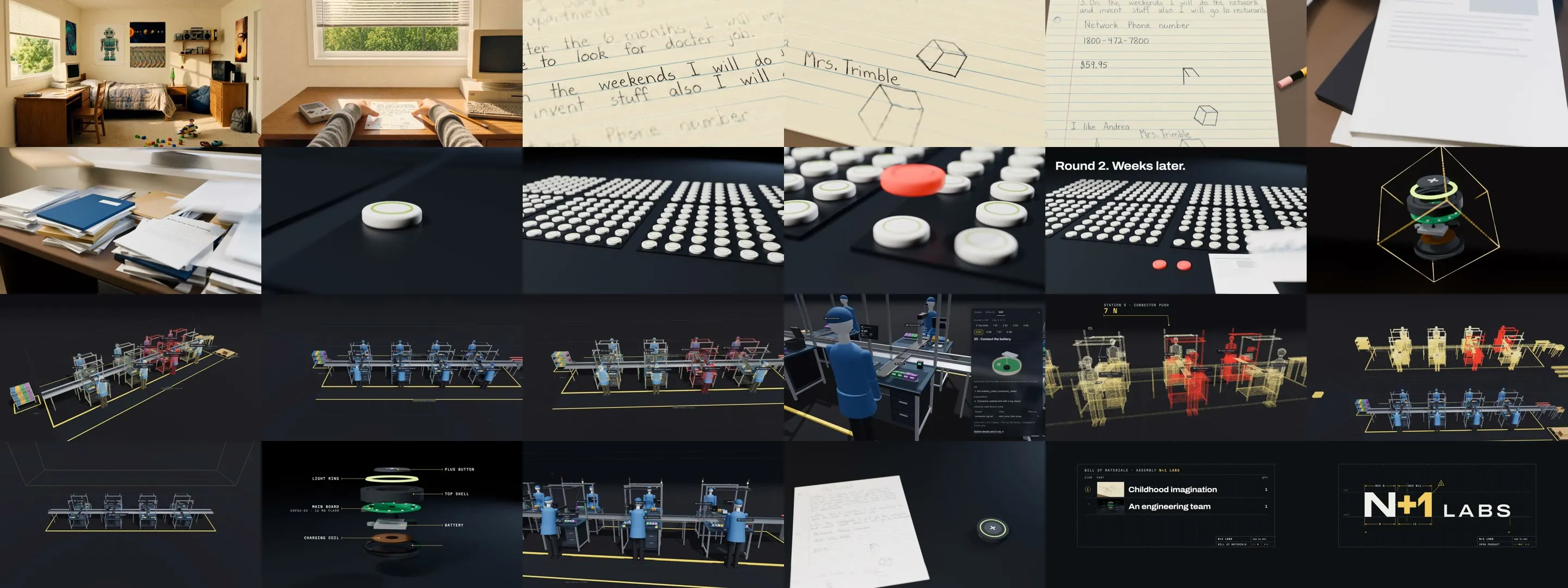
A sheet of binder paper. A plan for my future self, in pencil. Get a doctor job. On the weekends, invent stuff. Also go to restaurants.
That page opens the N+1 Labs launch film. It was planned at 90 seconds. It shipped at 2:03, because it got better when I stopped holding it there.
Three days. 24 shots. 2,956 frames. Five rounds of notes. Eleven cuts. Zero generated words.
The rules
The Injester film gave me the method. This one added two rules.
- Story first. A script before any picture.
- Real things stay real. My note is never generated. Not one word, not one doodle.
- AI for people, code for words. Generated video for the kid’s hands and the light. Every word, number and logo drawn in code.
- Capture the product, don’t draw it. The factory on screen is the live Golden Twin viewer, recorded one frame at a time.
- If the engine can’t do it, the film can’t show it.
The note
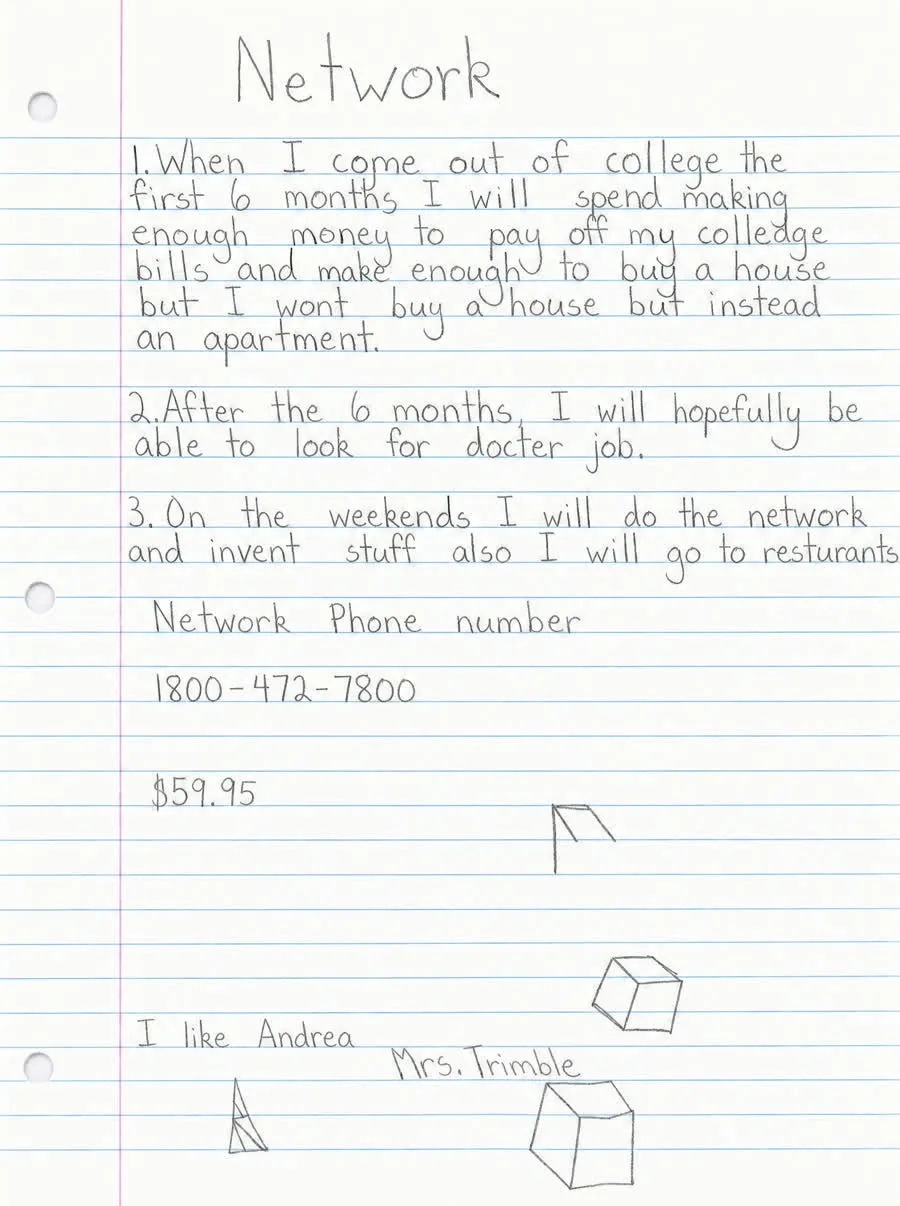 The real page, spelling included. My age, the date and my last name are off it.
Every shot of the note uses this photo. The close-ups of “docter job” and the cubes are renders of it, not redraws.
Run like a studio
A script, a board with eight gates, a claims ledger and a shot list came before any picture. Every department put options in a folder and never picked. I picked.
Three Claude sessions ran it, one job each. One planned the film, built the picture and checked every claim. One cut my voice and the music and ran the review dashboard. One worked the script with me. When the planning session ran long, it wrote a handoff and a fresh one took over mid-film.
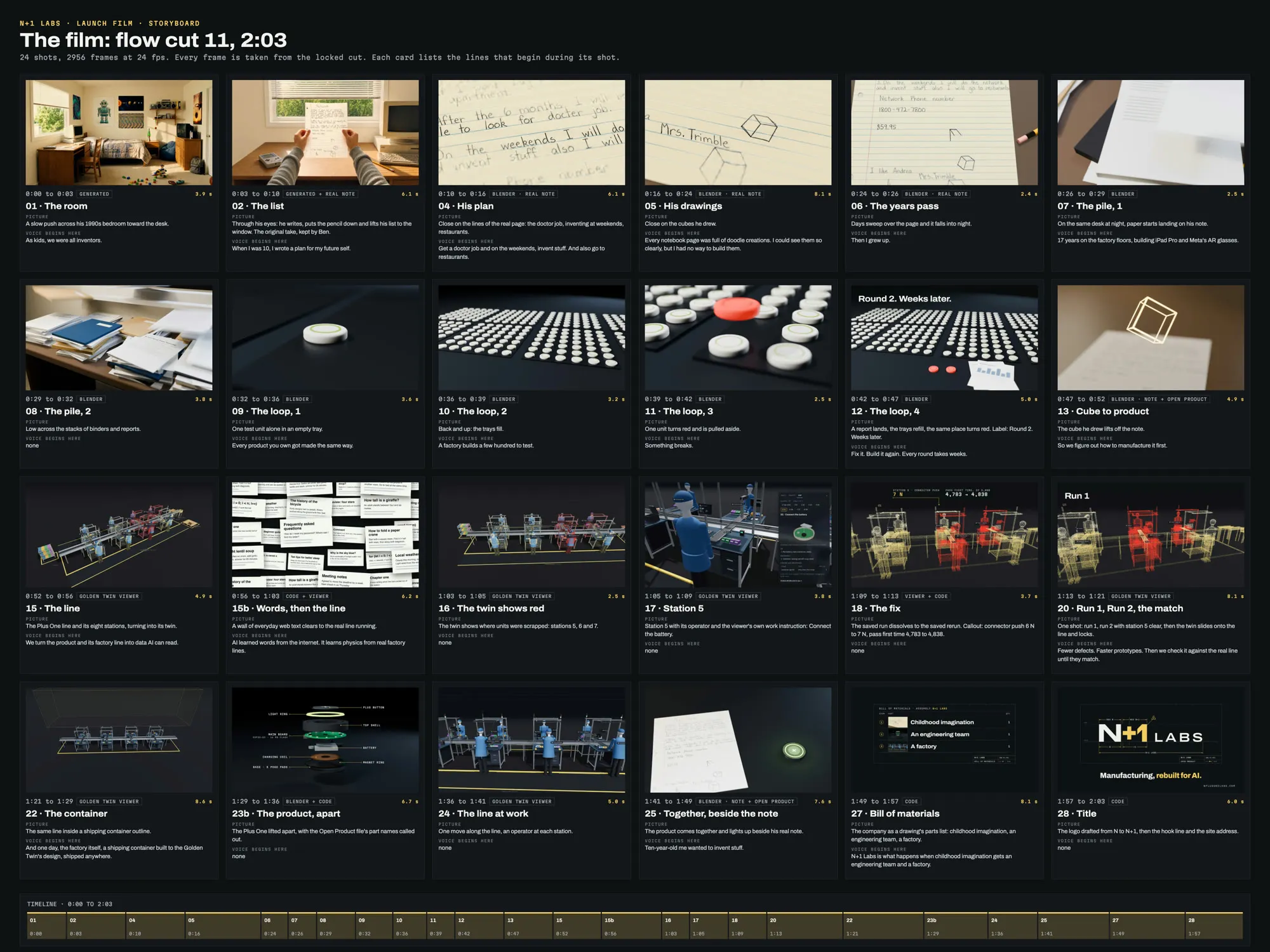 The shipped storyboard. 24 shots, every frame pulled from the locked cut.
The hardest six seconds
The kid writes, sets the pencil down and lifts the page to the window. The generated shot has a blank page, because no generated frame may carry readable text. My note goes on in code.
The first try followed the page with 15 hand placed points. My note on it was “the words are blurry and not meshed exactly with how the paper comes up it looks weird ai and fake”.
Optical flow failed too. A blank sheet gives it nothing to hold, and the lift takes one second. What worked was simple. The camera never moves, so we made a clean plate of the desk with no page, and found the page on every frame as whatever differs from it.
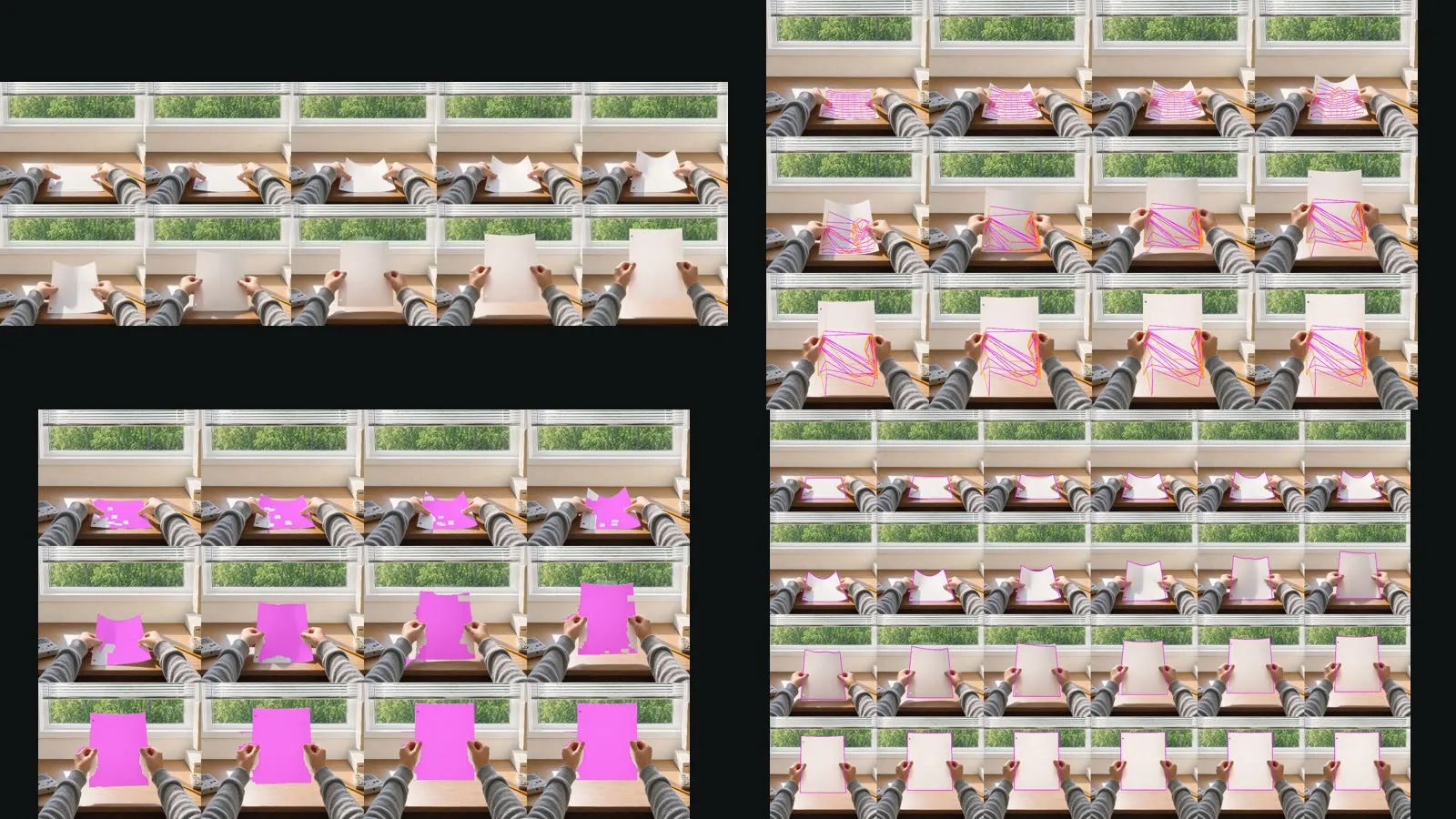 The blank page, the flow that failed, the page found against the clean plate, its outline on every frame.
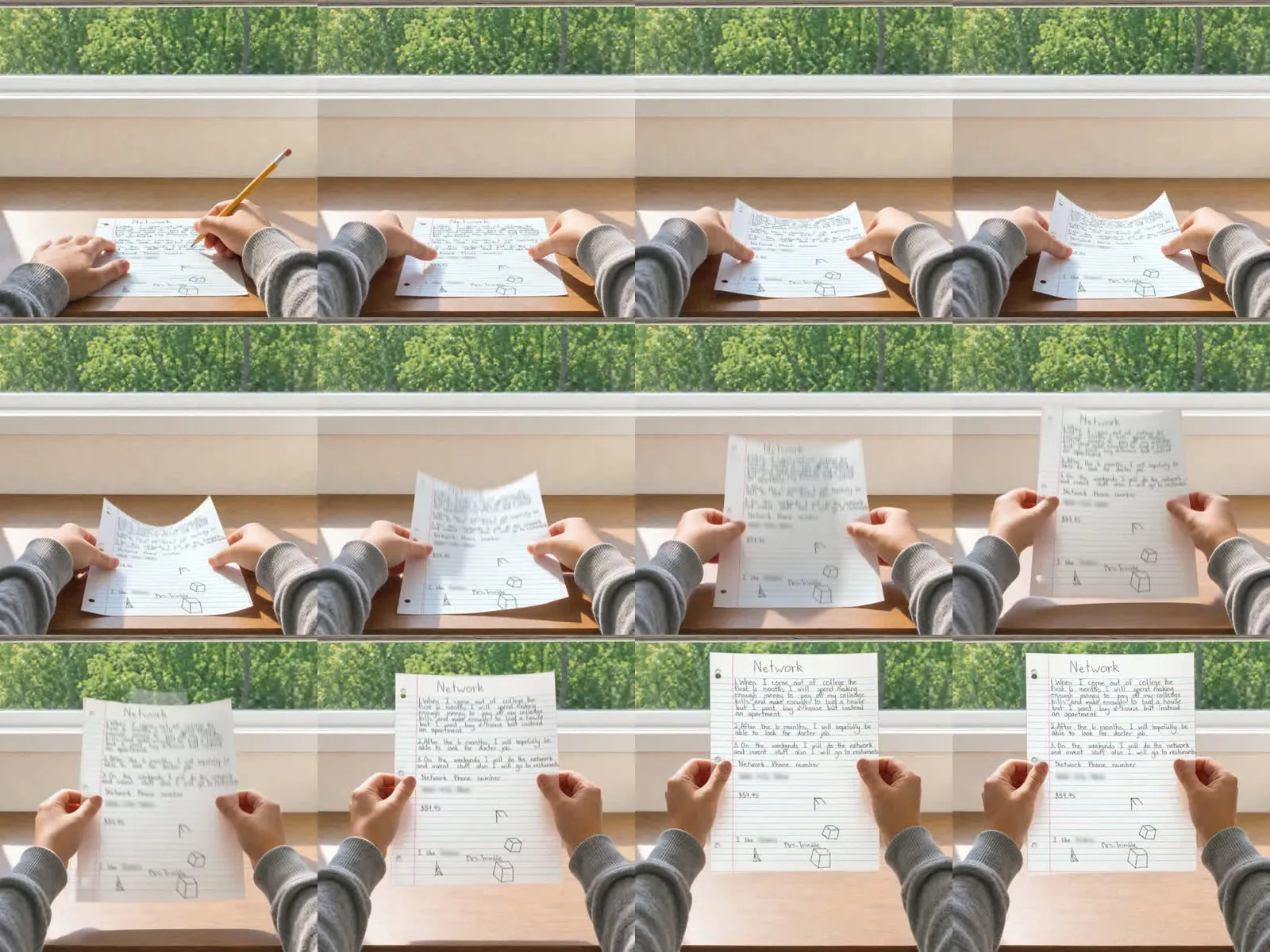 One sheet, bent by the page’s own curve, lit by the frame’s own light, hands kept in front.
Built from the real thing
After the opening, nothing is generated. The desk, the paper, the test units and the product are Blender, and the product is assembled from its Open Product file.
I asked for the cube in the film to be the cube I drew. So its corners were measured off the photo. The 3D lines start on my pencil lines, then lift off the page.
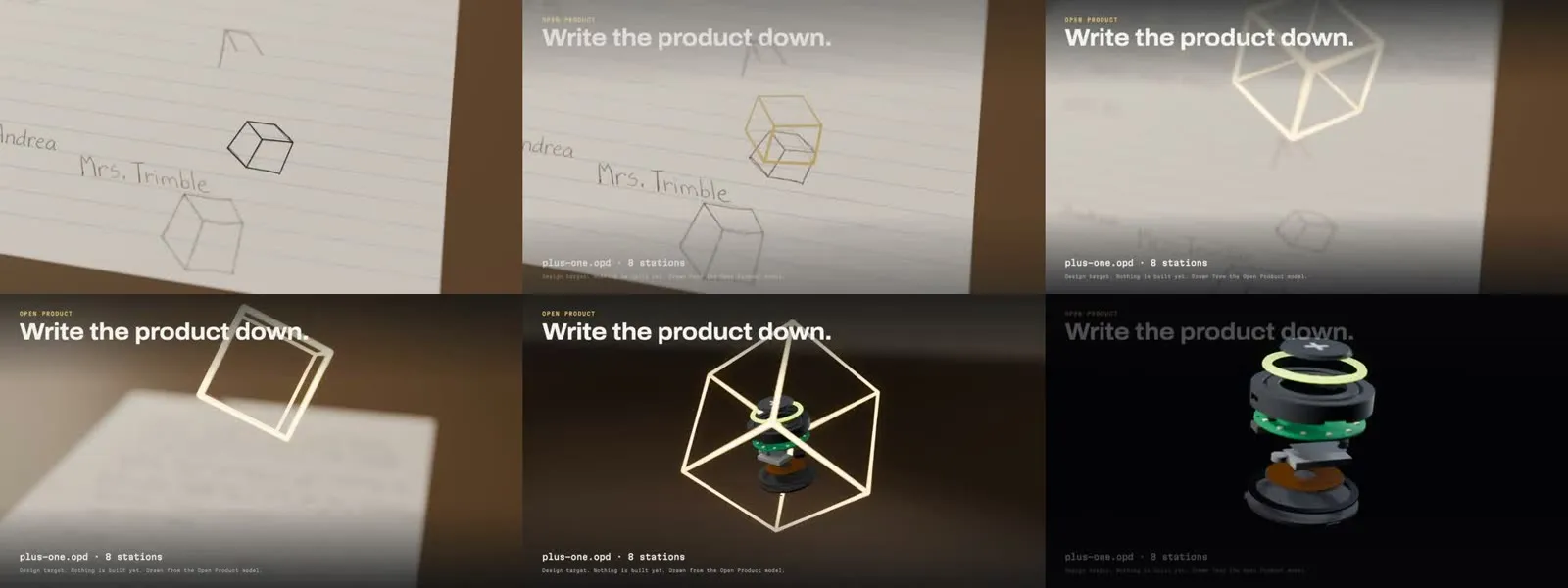
The middle of the film is the twin. A script steps the viewer’s clock one film frame at a time on an exact camera path. It runs 5,000 simulated units and 4,783 pass first time. Station 5, the battery connector, goes red. One setting changes, the connector push from 6 N to 7 N, and the rerun passes 4,838. Both numbers are the viewer’s own saved runs.

The twin is a simulation with assumed values. No real line has checked it yet. The film carries no caption saying so. This page does.
What the engine killed
Checking ideas against the engine killed three in one round. A physics close-up of the connector, because no such render exists. Robot arms on the line, because the Plus One line has operators. 5,000 units streaming past, because the viewer doesn’t do that. Only two runs exist, so the film shows two.
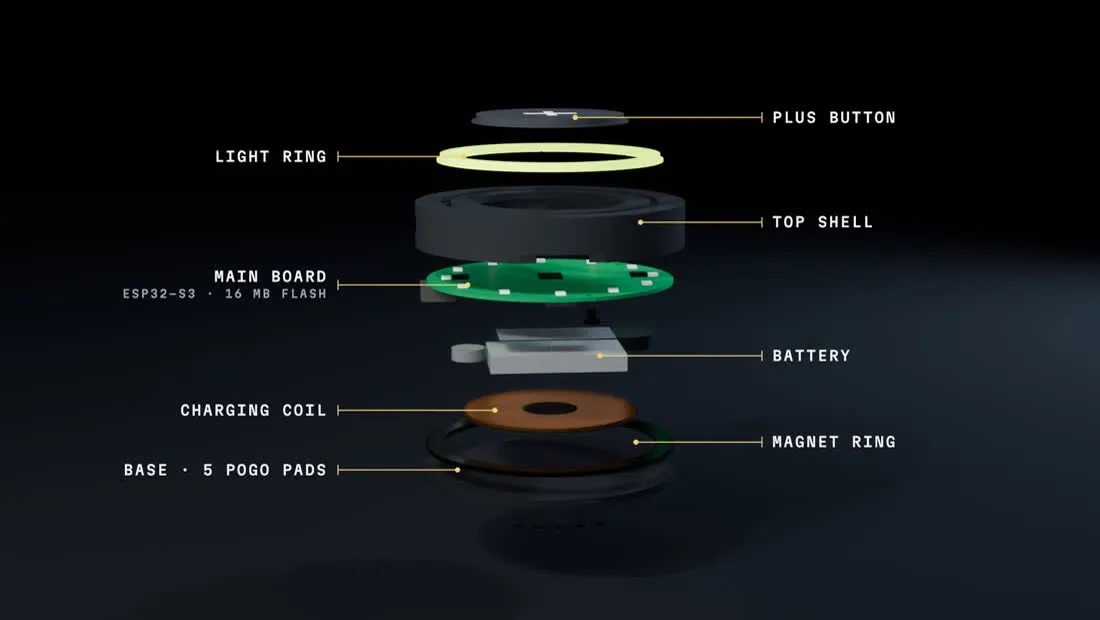 Every label is a part name from the Open Product file.
Five rounds of notes
I reviewed one scene at a time in a dashboard the editing session built. 39 notes. Most were one line.
- “the circles above the factory stations look cheap”
- “random numbers not explained”
- “herky jerky not a smoothe transition”
- “details details details”
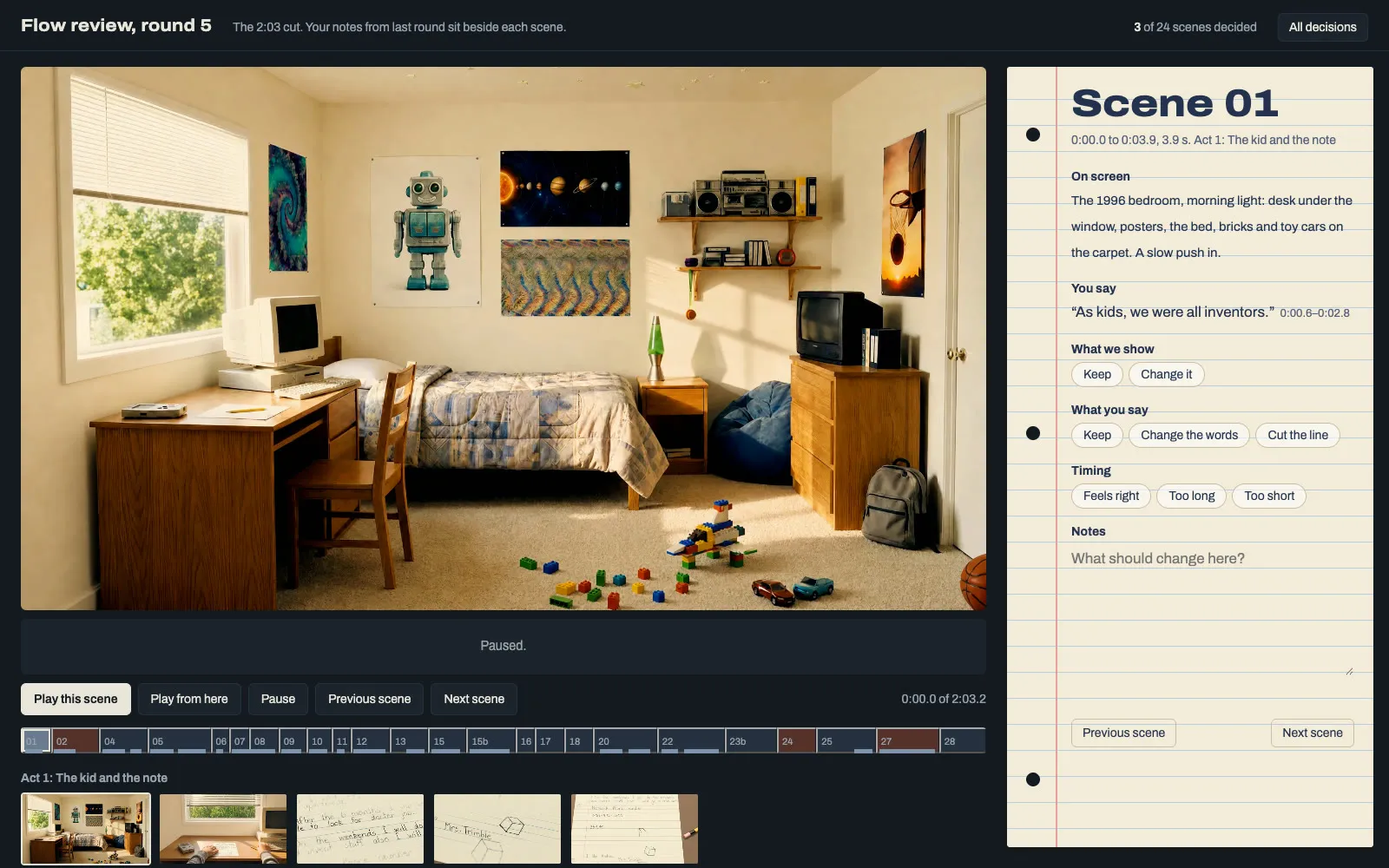
The note that changed the film came after a retime squeezed the first half to make 90 seconds. “i don’t like the edit, it makes it choppy and its more cut up.” So the cap went. 1:30 became 1:47, then 2:03.
The fix that made it worse
In round four I saw the pencil flip when the kid sets it down. We remade the shot. The writing got better and the lift got worse. A second remake fixed the lift and broke the hand.
“this is getting too complicated. Just revert back to the original.”
The original is in the film. Nobody sees the pencil.
Sound
The first cut had effects, room tone and music that dropped out for drama. “its super noisy and messy.” After that, one rule. My voice and one song at one level, nothing else. The song is Suno, cut on its own bar lines. I planned to re-record my voice. The first read held up.
What shipped
A clean 1080p master, a captioned one, a portrait cut and a caption file. The master was re-encoded from source frames and checked against the reviewed cut on all 2,956 frames.
What I’d tell anyone making one
- Drop the length before the flow. 90 seconds was my number, not the film’s.
- Keep the real thing real. A generated note would have been faster. It wouldn’t have been mine.
- Check the product before the storyboard. Better to lose an idea in round three than in public.
- Know when the fix is worse than the flaw.
- One voice, one song.
Ten year old me wanted to invent stuff. Day one. Let’s build.